

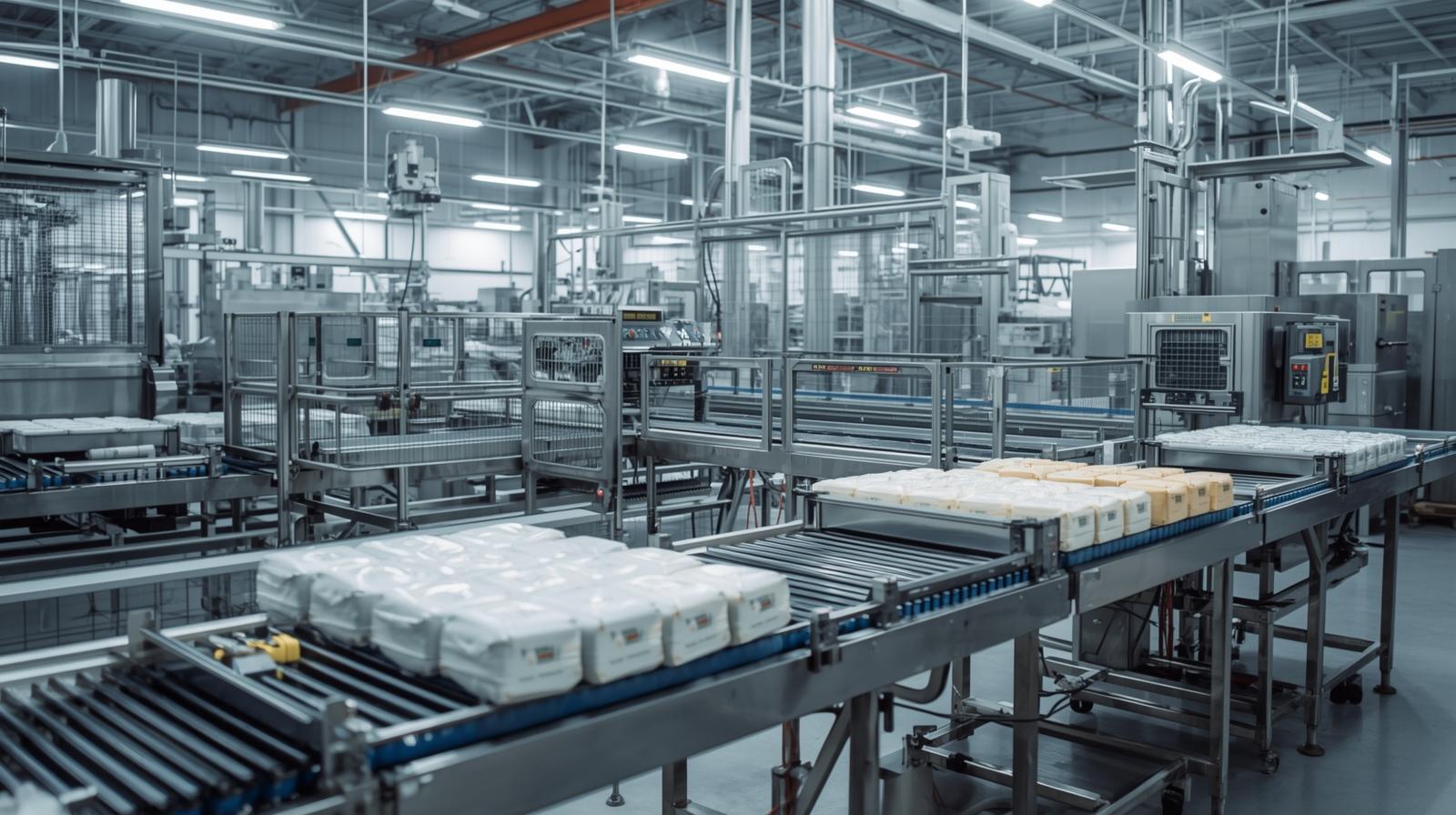
An Introduction to Cost Estimation
Recently, we were contacted by a customer whose original contractor had estimated a $21 million build that, over 18 months, ballooned to nearly $38 million. They were struggling to make their ROI and P&L work based on costs that were still rising. Unfortunately, their experience is not a unique one in food manufacturing.
In this piece, we’ll outline practical cost-estimation practices that help food processing, nutraceutical, and other sanitary manufacturing projects avoid the kinds of budget failures that make ROI and P&L impossible to sustain.
The misconception that cost overruns are primarily construction problems obscures the real issue. Cost estimation in food processing is not clerical work. It is a primary engineering exercise that determines whether a project is viable long before the first piece of equipment is delivered or the first product is run.
In practice, most cost overruns do not come from construction errors or contractor performance. They come from incomplete or poorly structured estimates that fail to account for how food processing facilities actually function. Budgets are often anchored to equipment pricing, with a flat percentage added for “everything else,” even though that approach consistently underestimates real-world costs.
A more accurate way to think about food plant cost estimation is to separate the project into three primary cost buckets:
- Facility build or preparation costs
- Utility modification or installation costs
- Equipment, controls, and programming costs
Every successful food processing project accounts for all three and understands how decisions in one bucket directly affect the others.
Facility Build or Preparation Costs
Facility costs include land acquisition or lease preparation, building construction or retrofit, floor loading, drainage, sanitary finishes, refrigeration spaces, warehousing, personnel areas, and regulatory compliance features. These costs are often underestimated when projects assume that an existing warehouse or shell building is “mostly ready” for food production.
In reality, food-grade construction imposes requirements that significantly exceed standard industrial space. Drainage, cleanability, insulation, floor/wall/ceiling treatments, structural support, and zoning or permitting constraints can drive costs well beyond initial expectations if they are not evaluated early.
Utility Modification or Installation Costs
Utilities are one of the most common sources of budget failure. Process equipment cannot function without adequate electrical capacity, steam generation, hot water, chilled water, refrigeration, compressed air, process water, and wastewater handling – not to mention that most facilities will also use either glycol or ammonia for their chillers.
Utility upgrades are frequently discovered late in the project, after equipment has already been selected, at which point costs become both unavoidable and expensive. In many food plants, utility infrastructure can cost as much as the processing equipment itself, especially in dairy, beverage, and ready-to-eat applications where sanitation loads are high.
Equipment, Controls, and Programming Costs
Equipment costs extend far beyond the purchase price of a pasteurizer, filler, processing line, or packaging solutions. Installation labor, piping, instrumentation, automation, programming, commissioning, validation, and operator training all contribute materially to the total cost.
Controls and programming are particularly prone to underestimation. Modern food facilities rely on automation for food safety, traceability, efficiency, and compliance. Treating controls as an afterthought rather than a core system often leads to delays, scope creep, and operational limitations once production begins.
Designing for Scalability
Many food processing facilities are intentionally designed with future expansion in mind. This may mean investing more upfront in any of the three cost buckets – oversizing utilities, strengthening building infrastructure, or selecting more flexible equipment and control systems.
These decisions are not errors; they are strategic choices. However, they must be accounted for explicitly during cost estimation. Facilities that plan for growth without budgeting for it often appear “over budget” when, in reality, they are simply under-modeled.
Cost Estimation as an Engineering Discipline
Robust cost estimation is not about pleasing an accountant. It is about staying operational, staying compliant, and staying in business. Successful processors treat estimation as an enabling engineering effort. In other words, they will use real data, prior operating experience, and realistic assumptions to build budgets that reflect how food plants actually run.
This is more than crunching numbers. It is a structured plan of action that aligns capital investment, operating cost, and long-term strategy. Poor estimation does not just slow a project down; it actively works against success.
Why Most Food Plant Budgets Fail Before Construction Begins
Food plant budgets rarely fail because a single number was wrong. They fail because no one ever assembles a cohesive, system-level view of the process early enough to understand where the pricing levers actually matter.
At the outset of most projects, cost estimation is fragmented. Equipment manufacturers quote to their own internal specifications. Engineering firms create estimations scoped within narrow disciplines. Utilities are estimated with rules of thumb. Packaging, labor, and sanitation impacts are deferred until later phases. As a result, no one is responsible for understanding how decisions in one part of the process cascade into costs elsewhere.
This creates a fundamental dilemma: projects are priced before they are understood.
It is common to see facilities overspend heavily on automated or high-spec equipment in one area of the process while leaving adjacent steps manual, labor-intensive, or operationally constrained. In other cases, portions of a facility are designed to “high-care” or hygienic standards that are not actually required for the product risk profile, driving unnecessary building, HVAC, and sanitation costs. Conversely, attempts to save money in packaging or material handling often create massive downstream labor and efficiency penalties that were never modeled at the budget stage.
These tradeoffs are difficult to see without a 10,000-foot view of the entire process. Packaging decisions affect labor. Sanitation class affects utilities. Utility availability affects equipment selection. Equipment selection affects building layout. Building layout affects material flow and staffing. Yet in early-stage budgeting, these relationships are rarely evaluated together.
The problem is compounded by the way projects are quoted. Equipment vendors price individual machines in isolation. Engineering firms work within siloed scopes. There is no shared specification, no apples-to-apples basis for comparison, and no unified model tying square footage, utilities, equipment, controls, labor, and sanitation together. Everything is estimated independently, often using assumptions that conflict with one another.
By the time these conflicts surface, typically during detailed design or early construction, the project is already committed. At that point, costs don’t increase because something went wrong; they increase because reality finally replaces guesswork.
The projects that avoid this outcome are not those with the lowest initial budgets. They are the ones that establish a system-level cost model early, understand where flexibility exists, and make deliberate choices about where to invest and where not to. Without that perspective, even well-intentioned estimates are little more than optimistic placeholders, and budget failure is only a matter of time.
Fixed Capital Costs: The Money Needed Prior to Day One
As a startup begins project planning, fixed capital cost is often estimated by anchoring the budget to the purchase price of processing equipment. While this approach is common, it is also one of the most consistent sources of underestimation in food manufacturing projects.
In practice, the purchase cost of equipment typically represents only 40–50% of total fixed capital investment. The remaining cost is driven by everything required to make that equipment operable within a real facility: installation labor, piping, electrical distribution, controls integration, building modifications, utilities, and engineering.
Even before a facility ever runs product, acquisition cost tells only part of the story. Installation, commissioning, infrastructure, controls integration, and supporting systems all require capital investment prior to startup. When these are included, the fixed capital committed to a piece of processing equipment can be several times its purchase price. This is why pre-Day One cost estimation must account for the full capital burden required to make equipment operable, not just vendor quotes.
We routinely see this disconnect happen in real projects. In a recent case, a client budgeted approximately $3 million for processing equipment based on supplier pricing. Once instrumentation, facility modifications, utilities, controls, and engineering were fully accounted for, the actual fixed capital investment associated with that equipment exceeded $7.4 million. Nothing went wrong; it was just that the original estimate simply never reflected the full scope of what the equipment required to operate.
A realistic fixed capital estimate for a food processing facility typically includes the following categories:
- Land acquisition or site control
- Building construction or retrofit for food-grade use
- Refrigeration and other critical facility systems
- Main processing and packaging equipment
- Installation labor and materials
- Process piping for water, steam, CIP, and sanitation
- Electrical infrastructure and power distribution
- Site development and utility services
- Engineering and design fees
- Contractor and construction management costs
- Contingency appropriate to project risk
Start-up capital is fundamentally about enabling production, not just purchasing assets. The accuracy of a fixed capital estimate depends on how well these categories are understood, scoped, and integrated early in the project.
Location, labor availability, regulatory environment, and supply-chain conditions all materially affect fixed capital costs. A facility built in a rural area with limited skilled labor will face different cost pressures than one constructed near an industrial center. Ignoring these variables at the estimation stage does not make them disappear; it simply defers their impact until the project is already committed.
Accurate fixed capital estimation requires more than unit costs and square footage assumptions. It requires an understanding of how equipment, utilities, construction, and operations intersect in the real world.
Bridging this gap requires data. At DeJong Operations Management & Consulting, we have broad experience that has led us to recognize the need to provide guidance that can prevent the vast majority of missteps in the ‘budgetary phase’.
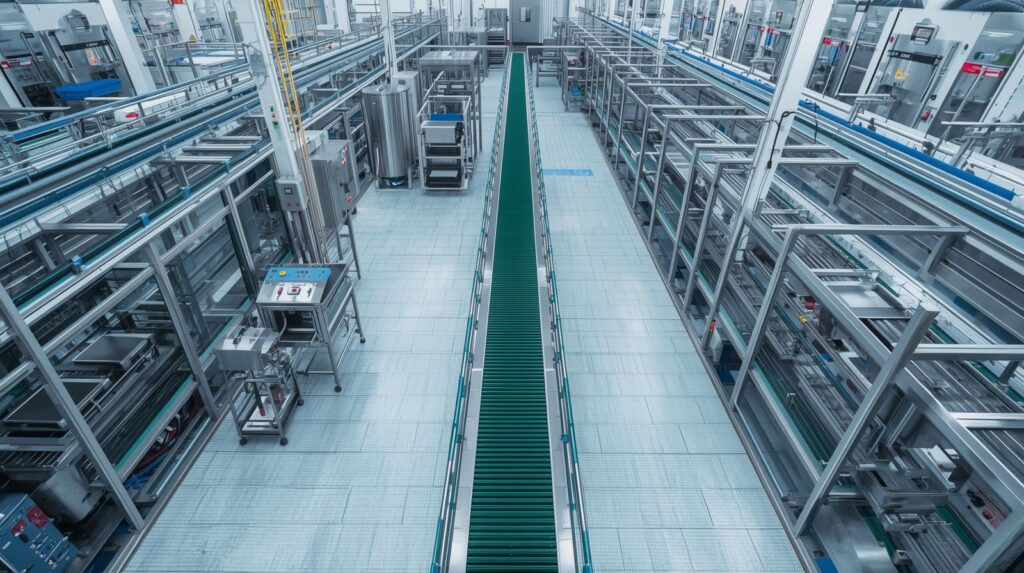
Conceptual Engineering Comes First
Before hard and soft costs can be estimated with any reliability, the project must first be understood at a conceptual level. Without this step, early budgets are little more than educated guesses assembled from disconnected assumptions.
Conceptual engineering is the process of defining what the facility is actually intended to do at a system level before committing to detailed design or construction. This work is intentionally non-buildable. Its purpose is not to generate permit-ready drawings, but to create a cohesive technical and operational model that allows meaningful cost prediction.
At this stage, conceptual engineering typically includes high-level facility layouts, preliminary process flow diagrams and P&IDs, equipment lists, utility demand projections, staffing and labor assumptions, and overall production logic. In some cases, it also includes site-specific evaluations to determine whether a particular building or location can realistically support the intended process.
This work is usually performed with a relatively modest investment of engineering time (often on the order of 100 to 200 hours), yet it establishes the framework that all subsequent cost decisions depend on. More importantly, it exposes tradeoffs early, when they can still be addressed inexpensively: automation versus labor, sanitation class versus building cost, utility intensity versus operating expense, and scalability versus upfront capital.
Without this step, cost estimation efforts tend to fragment. Equipment is priced without a shared specification. Utilities are estimated without a defined load profile. Labor is modeled without understanding the process flow. The result is not a single bad assumption, but dozens of small ones that compound into a major budget failure.
Conceptual engineering does not eliminate risk, but it dramatically reduces uncertainty. It creates a common reference point that allows hard and soft costs to be evaluated in context, which is essential before any serious financial commitment is made.
With a conceptual engineering model in place:
- Equipment manufacturers can be engaged on a common basis, allowing budgetary quotes to be compared directly against consistent scope, performance, and deliverables.
- Municipalities and state agencies can be engaged (if applicable) with sufficient detail to forecast utility loading, job creation, and land use, and to meaningfully discuss grants, incentives, or other development support. At a minimum, funding conversations can be pursued effectively.
- Facility sizing, future expansion, and design constraints can be evaluated intentionally, enabling informed decisions around scalability, building footprint, and long-term flexibility.
Operating Costs: The Expenses That Determine Whether the Plant Survives
Fixed capital determines whether a project can be built. Operating costs determine whether it stays alive.
Once production begins, food manufacturers incur a continuous stream of expenses that do not stop when the ribbon is cut. These costs are often discussed late in the project, treated as accounting artifacts, or estimated using broad percentages. That approach is one of the most common reasons facilities that look profitable on paper struggle or fail once they begin operating.
Operating costs are not secondary to capital costs. In many food processing facilities, annual operating expenses can approach or exceed the total fixed capital investment within only a few years of operation. Small errors in operating cost assumptions compound quickly, directly impacting margin, cash flow, and long-term viability.
A reliable operating cost model must be grounded in how the plant actually runs, not in generalized industry averages.
Variable Production Costs Are Process-Driven, Not Percentage-Driven
Variable costs scale with production, but they do not scale linearly or predictably unless the process itself is well understood. The largest contributors typically include raw materials, utilities, direct labor, sanitation, consumables, and waste handling, but the relative importance of each varies dramatically by product type, process design, and sanitation requirements.
The most common mistake in estimating variable costs is anchoring them to a single output metric (such as cost per pound) without understanding why those costs exist. In reality, variable costs are the consequence of decisions made during conceptual and subsequent formalized (buildable) process engineering design:
- Product formulation determines raw material exposure and commodity risk
- Sanitation class and design drive water, chemical, steam, and labor consumption
- Line speed and changeover strategy dictate labor efficiency and downtime
- Equipment selection determines yield loss, rework, and scrap rates – along with, surprisingly, total work-force engagement
Specifically, in a food or dairy processing facility, most equipment can be either automated or manual. Automated equipment costs more initially but tends to reduce labor exposure. Manual equipment costs less initially but tends to add labor exposure. The reality is that almost no facilities are ‘fully’ automated. In DeJong’s experience, there is a ‘sliding scale’ that determines the precise level at which a facility can absorb initial costs while still allowing for a sustainable workforce in its ongoing operation.
Without explicitly modeling these relationships, operating cost estimates are little more than optimistic placeholders.
Raw Materials: A Dominant Cost That Sets the Ceiling, Not the Strategy
Raw materials are typically among the largest operating costs in food manufacturing, but they are also one of the least discretionary. Unlike labor, utilities, or throughput efficiency, material costs are largely dictated by external factors rather than by facility design or operational excellence.
For most processors, raw material cost is not where profit is created. It represents the cost of participation in the market and establishes a hard ceiling on achievable margin. Commodity pricing, ingredient availability, packaging markets, supplier concentration, transportation distance, and contract structure exert far more influence over material cost than day-to-day plant decisions. While procurement strategy and supplier negotiation matter, they tend to shape exposure at the margins rather than fundamentally alter the cost structure.
From a modeling perspective, the risk is not that raw material cost is overlooked. In our experience, it rarely is. The risk is that it is treated as a fixed input rather than as a bounded variable shaped by yield, losses, and operational realities.
Material cost exposure is not defined by nameplate throughput or theoretical formulation. It is defined by how material actually moves through the process: startup scrap, changeovers, yield losses, rework, quality holds, and process instability. Two facilities producing the same product at the same nominal rate can experience materially different effective material costs based on integration quality, control stability, and downtime behavior. These differences are not theoretical; they accumulate quietly and persistently over time.
Equally important, material pricing should be modeled as a range rather than a point estimate. Relying on current spot prices without accounting for historical volatility, supply-chain fragility, or contract timing creates a false sense of precision. This is not a failure of procurement; it is a failure of modeling. A realistic operating model acknowledges uncertainty and bounds it explicitly rather than assuming it away.
The purpose of raw material cost modeling is not to “optimize” ingredients or redesign formulations. It is to correctly represent exposure so that downstream decisions (equipment selection, sanitation strategy, line speed, and staffing) are evaluated against realistic economic constraints. When yield loss and scrap are under-modeled by even a few percentage points, the resulting error can overwhelm gains achieved elsewhere in the system.
In short, raw materials are usually not the lever that makes a plant profitable, but they are the constraint that defines the playing field. Accurate cost modeling treats them accordingly: as a dominant, largely external cost that must be represented honestly so that efficiency, reliability, and small operational wins can be evaluated in their proper economic context.
Utilities: Where Design Decisions Become Permanent Expenses
Utility costs are among the most consistently underestimated operating expenses in food plants, largely because they are treated as static line items rather than as outcomes of engineering choices.
Electricity, steam, hot water, chilled water, refrigeration, compressed air, process water, and wastewater handling are not independent costs. They are tightly coupled to sanitation strategy, equipment thermal efficiency, production scheduling, and facility layout.
A facility designed without a clear utility load profile will often discover (after startup) that energy consumption bears little resemblance to early estimates. At that point, costs are locked in. Unlike labor or materials, utility inefficiencies are extremely difficult to correct once infrastructure is installed.
Energy recovery, heat integration, and load leveling can materially reduce operating expenses, but only if they are considered early enough to influence design. Treating these opportunities as “future optimizations” almost always means they never happen.
Labor: The Cost Everyone Simplifies and Then Pays For
Labor cost estimation routinely fails because it is reduced to headcount multiplied by wage rate. In reality, labor cost is driven by process flow, material handling, automation level, sanitation burden, and changeover frequency.
Nominal shift length is not productive time. Sanitation, meetings, startup, downtime, and quality interventions all consume labor hours that do not produce a sellable product. Facilities that ignore this reality frequently understate labor needs while overestimating throughput.
Separating direct labor from indirect labor is necessary, but insufficient. Maintenance staffing, quality personnel, sanitation crews, supervisors, and logistics support are not optional add-ons; they are structural requirements of regulated food production.
Labor efficiency is designed into a facility long before the first operator is hired. Poor layout, excessive manual handling, and fragmented automation create permanent labor penalties that no amount of management pressure can overcome.
Maintenance, Reliability, and the Cost of Downtime
Maintenance is often treated as a fixed percentage of capital investment. In practice, maintenance cost is a function of equipment reliability, operating severity, sanitation exposure, and spare parts strategy.
Facilities with aggressive sanitation regimes, thermal cycling, or corrosive environments will experience materially higher maintenance demand than light-duty operations, regardless of capital value. Conversely, facilities that invest appropriately in reliability often see lower total cost of ownership despite higher upfront equipment cost.
The most damaging maintenance cost is not the repair itself, but the unplanned downtime it causes. Lost production, scrap, overtime, and missed orders routinely dwarf the direct cost of parts and labor.
A credible operating model accounts for realistic uptime, not best-case availability.
Overhead, Compliance, and the Costs That Don’t Show Up on Quotes
Food manufacturing carries regulatory, insurance, and compliance costs that do not scale neatly with production. Environmental permitting, wastewater treatment, food safety programs, recordkeeping, audits, and inspections all impose ongoing expenses.
Waste handling and disposal are increasingly significant, particularly in regions with strict environmental regulations. Byproduct management, wastewater surcharges, and disposal logistics can materially affect operating costs if not modeled early.
These costs are rarely captured by vendor quotes or construction budgets, yet they persist for the life of the facility.
Why Operating Cost Errors Are More Dangerous Than Capital Overruns
Capital overruns hurt once. Operating cost errors hurt every day.
A facility that misses its operating cost assumptions by even a modest margin may appear profitable during early ramp-up, only to see margins collapse once production stabilizes. Because operating costs recur continuously, small modeling errors compound into existential threats.
This is why operating cost estimation cannot be separated from conceptual engineering. Throughput, sanitation, automation, utilities, labor, and yield must be modeled as a single system. Estimating them independently guarantees conflict.
From Estimation to Control: Designing for Predictable Economics
Facilities that perform well financially do not rely on hope or averages. They design for predictability.
That means:
- Modeling yield loss instead of assuming perfection
- Designing utilities for real loads, not nominal ones
- Aligning automation strategy with labor economics
- Matching sanitation class to actual product risk
- Understanding how changeovers affect cost and capacity
When these factors are addressed early, operating costs become manageable and controllable. When they are deferred, they become surprises – and surprises are expensive.
When Expert Modeling Becomes Essential
Food processing plants are not generic manufacturing facilities. They are tightly regulated, sanitation-intensive systems where small design choices create permanent economic consequences.
The organizations that succeed do not guess at operating costs. They build system-level models grounded in real operating experience, validated data, and disciplined engineering judgment.
At DeJong Operations Management & Consulting, operating cost modeling is treated as an extension of conceptual engineering, not as an accounting exercise. By integrating process design, utilities, labor, and sanitation into a unified model early, clients gain visibility into where money is actually made (or lost) before committing capital.
Getting operating costs right is not about precision for its own sake. It is about ensuring that once the plant is built, it can actually do what it was designed to do: operate profitably, sustainably, and predictably in the real world.